 Irrespective of your age, experience or profession, teaching yourself something new – self learning in other words – is a matter of taking responsibility for learning in your own hands. No one else really cares if you learn or not (with the possible exception of your parents) so it’s time to understand the four cardinal rules of self learning and applying these in everything from learning a new language to getting fit to learning a new sport…
Author: Asad Zaidi (Page 10 of 34)
This is an extract from an article with the same title in the Harvard Business Review authored by Adam Waytz and Malia Mason.
 Neuroscience which is the science of how the brain works has been around for a long time but it has taught us surprisingly little about how the mind works. The few things it has taught though have been articulated very well. This article is about those few things. These are the default, reward, affect, and control core neural networks. The role of these networks and their implications for people managers are now starting to be understood.
 Not all innovative ideas convert to success. In fact, the vast majority of innovative ideas do not succeed. So when converting an idea into reality, are there some key processes within the innovation program that can help to secure higher success rates? Turns out that innovation is indeed a series of processes that can be thought of as the 7 stages of innovation.
 Most of us feel worried, fearful or downright stupid when doing something that extends us beyond our comfort zone. It’s not skill that holds us back. We are up against ourselves. The biggest barrier to self development is emotional. If we can get over the initial trauma of feeling incompetent and awkward, we can unlock the doors to a new and more successful reality…
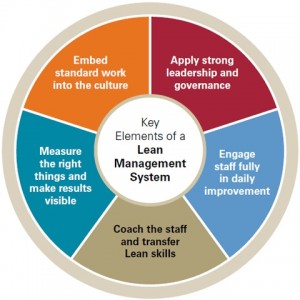 Lean management began as an effort at Toyota to reduce time for a manufacturing process and thus reduce in-process inventory. This became known as just-in-time inventory management. The result was less warehouse space, fewer forklifts, less workshop space, etc. Once the flow of work can be free of interruption and unnecessary repeat work, waste is eliminated. Lean is therefore the elimination of waste. But, more importantly, lean is continuous improvement in all work processes…
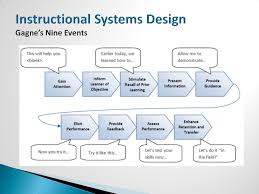 Way back in 1965, Robert Gagné, an American psychologist, formulated The Conditions of Learning. This paper suggested that certain conditions must be present in the learner for absorption and retention of knowledge to occur. He called these conditions the 9 Events of Instruction, based on the factors – both internal and external – that contribute to learning. The internal factors are the learner’s previous knowledge while the external factors include things like the methodology of instruction. You can use knowledge of the 9 Events of Instruction to design training that maximize learner engagement..
 Ask CEO’s and senior management of large companies in any sector and it will become apparent that many of them – in fact the vast majority – are not satisfied that their strategic planning process is working. There seems to be a belief that these processes are essentially a waste of time and distract the organization away from focusing on core issues. This belief incidentally is not just restricted to large organizations – it is an even bigger concern for not so large companies with limited resources….
Recent Comments