 There are some rare individuals who have applied themselves over a long time (usually tens of years of practice) to acquire a particular skill and become a specialist – such as a world-class tennis player, a renowned public speaker. For many of us who have not had the good fortune of finding that one special area from an early age, there are other skills that are easier to acquire to achieve personal success. Here are the 4 skills for success that really matter…
Author: Asad Zaidi (Page 11 of 34)
 From behavioral interviewing techniques to psychometric testing, managers have access to a range of tools to make the staff hiring process foolproof and reduce the possibility of the wrong hire. The reality is that no process can make the hiring completely foolproof. But it is possible to make the process almost foolproof by using a tried and tested approach to effective hiring…
This article is based on the 5-Stage model originally proposed by author Elisabeth Kubler-Ross
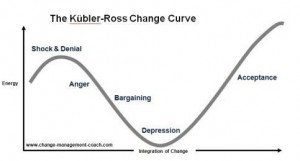 Any kind of change involves the loss of something: status quo, possessions, relationships, etc. The 5-Stage model suggested by Elisabeth Kubler-Ross in a book related to loss of life (an extreme form of loss) has been also used to explain how people react to change…
The information in this article is based on published research carried out by Center for Creative Leadership (CCL)…
 The way the priority and the focus on leadership has changed is a function of how organizational and leadership thinking has evolved over the last 30 years or so. To illustrate the difference, we contrast across various situations what leadership used to be and what it means now:
 There are literally hundreds of ways to improve your productivity. But if you are looking for a quantum difference where you can virtually triple your productivity, then it is necessary to use a 3-step approach. Using all 3 steps and using these simultaneously is what can produce the remarkable difference.
This is an extract from a brilliant article on the blog of Deepak Chopra.
 The conventional wisdom – taught at business schools and in government – is that good decisions need more objectivity based on logic and data rather than subjectivity based on the human element. This however goes against the fact that all decisions are essentially human since we do not have any machines making these decisions for us. In fact, history has demonstrated that the greatest decisions always involved a mix of human genius, passion and determination…
 It is December 25, 2015. In just a few days, you have an opportunity to start afresh with New Year resolutions. Maybe it’s the weight you wanted to lose, the new skill you wanted to acquire or the leap you wanted to make to start your own business. Now ask yourself how many times you have honored your resolution in all the years that have passed since you started thinking about some strategy for reinventing yourself.
Recent Comments