 How many of us really understand what success actually means? The truth is that most people have absolutely no clue about this and the majority of those who have created a definition are likely to be wrong. How do I know this? Because I have struggled with this question myself for many years and it is without question one of the most vexing questions of our lifetime.
Category: Achievement and Success (Page 2 of 3)
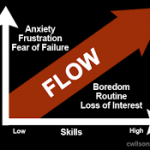 The state where you get a sense of optimum performance, everything is going according to plan and you just go from one win or success to another is often called the Zone or the Flow State. The Flow State is when a sportsman is in supreme form or a stockbroker keeps getting one winning trade after another. It is one of those states that comes and then disappears and it is hard to figure out how to get back into that state. Based on research by Steven Kotler and Jamie Wheal, it is now possible to switch on the Flow State by understanding the triggers that create the heightened focus required…
 The most popular class in Harvard University’s history (900 students) is “Positive Psychology” taught by Professor Tal Ben Shahar. This class became really popular because it taught as part of its curriculum what is now referred to as the science of happiness. Here are some key lessons from the work of Professor Shahar…
 It is December 25, 2015. In just a few days, you have an opportunity to start afresh with New Year resolutions. Maybe it’s the weight you wanted to lose, the new skill you wanted to acquire or the leap you wanted to make to start your own business. Now ask yourself how many times you have honored your resolution in all the years that have passed since you started thinking about some strategy for reinventing yourself.
 Our natural tendency is to behave like butterflies: flitting from one flower to another in search of nutrition – or from one task to another before the first task is complete – or switching from one priority to another on impulse.
To justify this, we call this multi-tasking but this isn’t multi-tasking, it is a lack of focus and it extracts a heavy price: loss of productivity, missed goals and a sense that much time has been expended and not much achieved. Learning to focus on just one thing at a time is the answer; it is not easy to do but the rewards can be amazing…
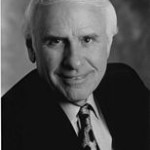 An extract of extraordinary insights for living and working by Jim Rohn, a speaker and author famous for his motivational audio programs and quotes on business and life in general. He passed away in 2009 but his work and quotes live on today. Rohn’s book “Five Major Pieces to the Life Puzzle”, published in 1991, was built around what he considered the five components of success:
Philosophy – how you think
Attitude – how you feel
Action – what you do
Results – measured often to see if you are making progress
Lifestyle – the kind of life you make for yourself out of the first four pieces
 There are thousands of successful men and women who are where they are today because they once picked up a copy of Think and Grow Rich by Napoleon Hill. The man who then stands up and walks out into the world is a different, a changed man. He becomes someone with the unique knowledge to turn dreams into reality and thoughts into things.
Recent Comments